Bipolar Test
Review past mood changes with the 15-question bipolar test and get a clear screening result you can save or discuss.

How do I read bipolar test results?
When mood, sleep or activity have changed noticeably, a bipolar test can help you organize what happened. I would start with a specific period you remember, then read each question against that experience. The test above follows thirteen symptom questions with timing and impact questions. You get a Yes count, a positive or negative screening result, and an editable summary. It is general information, not a diagnosis or personal medical advice.
Think about the wording “ever been a period,” rather than answering only for today. Feeling well now does not erase a past observation, and feeling distressed now does not automatically establish the lifetime pattern the questions ask about. If you are unsure, record uncertainty. I would rather leave a self-check incomplete than make it appear reassuring because a difficult question was silently treated as No.
How do I take the test?
This test is for adults answering about themselves. Select Start test to begin. Choose Yes or No for each of the first thirteen prompts, then answer the same-period question and select one impact response. Selecting a choice never advances the page automatically. Use Next after reading it, or go back to reconsider. Unsure and Prefer to skip are added interface options; they are not substitutions for a clinical response and keep the result incomplete.
The English questions retain the supplied MDQ-style wording. Our translations and extra navigation choices are interface adaptations, not newly validated clinical versions. A professional using a questionnaire can explain which version and instructions belong in their assessment. You can pause, open a partial summary, or leave. The support link and guides do not require finishing the self-check or reaching any particular count.
How is the MDQ result scored?
| Condition | What the check uses | Question it answers |
|---|---|---|
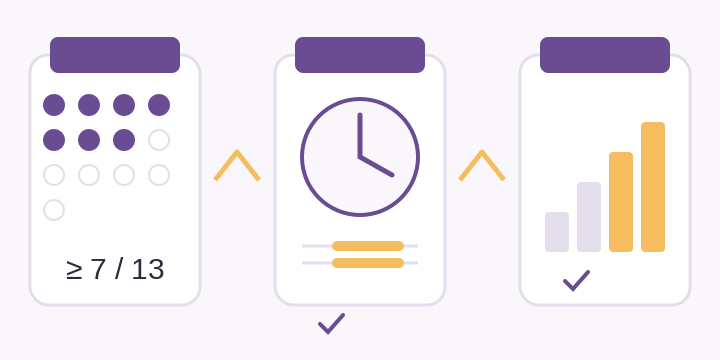
| Symptom count | At least 7 explicit Yes responses out of 13 | How many symptoms did you recognize? |
| Same period | Yes to several experiences occurring together | Did several experiences occur together? |
| Impact | Moderate or serious problems reported | How much did they affect daily life? |
For a complete answer set, all three conditions must be met together. Seven Yes responses with same-period Yes and moderate impact produce a positive screening result. Thirteen Yes responses with same-period No produce a negative one, as do seven with only minor impact. Read the count, timing and impact together when you review your result. Each part answers a different question about your experiences.
One skipped, uncertain or unanswered prompt means the summary remains incomplete. It does not receive a negative conclusion. When complete answers do not meet the rule, that still does not rule out bipolar disorder or another concern. When they do meet it, the output is a reason to discuss professional assessment, not a diagnosis. The MDQ rule guide explains the difference between a threshold and a probability.
The original MDQ scoring sheet requires all three conditions.
Can I edit or save my answers?
A completed test shows Positive screening result or Negative screening result, together with the number of Yes answers. The bar has thirteen segments and a marker at seven. The circles below preserve the original question order: filled means Yes, an outline means No, and a question mark means missing or uncertain. Select a circle or open the full review to revisit a question. After changing it, choose Update my result to return directly to the recalculated summary. You can also review other questions first. An optional note lets you record one question for a professional conversation; it does not change the count.
Copy, text download and print prepare a local summary of count, timing, impact and rule status. These pieces can themselves be sensitive. Individual symptom answers and the optional note are included only when you choose the additional checkbox. Your diary stays separate. Review any copy before sending it elsewhere; the tool does not send information to a clinician or support service. A quiz result should not become a public share link.
How does a mood diary differ from a bipolar test?
The Mood & sleep diary records recent days separately from your lifetime answers. Enter a day, your mood rating from −3 to +3 relative to usual, energy from 0 to 4, and sleep hours from 0 to 24. These are personal ratings, rather than clinical scales. A mood value of 0 means your usual mood; energy 2 means your usual energy. Your diary entries stay separate from the test result.
There is one entry per day, with room for ninety recorded days. Saving an existing day updates it. Blank sleep stays blank until you enter a value; enter 0 only when you mean zero hours. For a hypothetical short night of six hours, enter 6, and use the note to add context such as travel or waking early. Mood and energy should describe the same day as the sleep entry. Keeping that reference consistent makes later comparisons easier to read.
What do gaps in the mood chart mean?
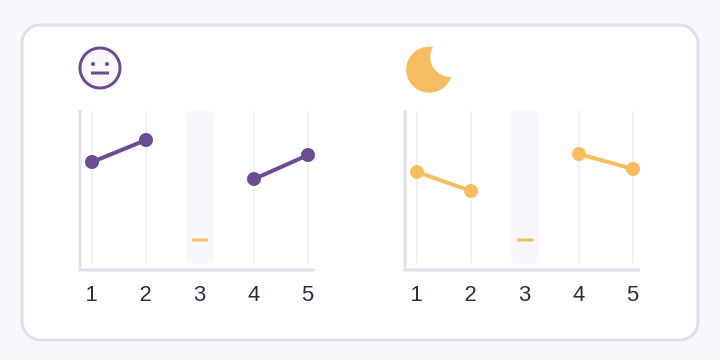
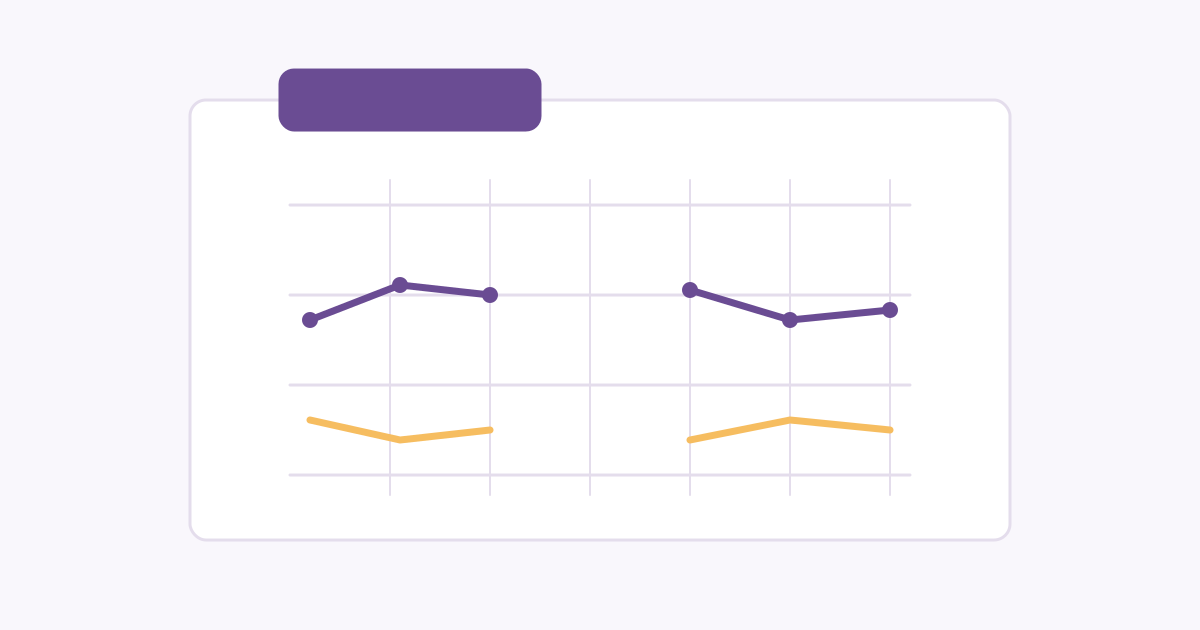
The chart uses actual calendar spacing and joins only consecutive recorded days. If you record Monday and Wednesday but miss Tuesday, the two points remain separated. Add Tuesday later and both connecting segments appear. Mood and sleep have separate panels and axes, while energy remains in the table. Each row retains your values and a short note. Select Edit to correct a day or Delete to remove it with confirmation. I check the table alongside the chart when a point looks surprising.
A diary CSV contains only diary fields, with localized headings and protections against spreadsheet formulas in notes. It does not include self-check responses. Downloaded files can reveal sensitive observations and remain on your device until you remove them. Read the mood and sleep record guide for practical ways to distinguish an observation from a conclusion and keep an incomplete record useful.
Are my answers saved in this browser?
By default, both workspaces live in the memory of the open page, without the tool uploading answers. Refreshing or leaving loses that session. An optional browser draft stores the self-check and diary locally. Someone else using that browser may see it. The wider website may still contain advertising and analytics; this local handling is not a claim that every part of the website is anonymous or free of tracking.
Turning draft saving off removes this tool’s saved key while keeping the open session. Forget this session asks for a second activation, then clears its in-memory data and saved draft. It does not erase browsing history, clipboard content, printouts, screenshots, other websites’ storage or downloaded files. If storage is blocked, the interface says a draft was not confirmed; you can continue in the open page without relying on persistence.
Which answers give a positive screening result?
| Input or action | Expected behavior |
|---|---|
| 6 Yes, same-period Yes, moderate impact | Complete; rule not met |
| 7 Yes, same-period Yes, moderate impact | Complete; all three conditions met |
| 13 Yes, same-period No, serious impact | Complete; rule not met |
| Any unsure or skipped prompt | Incomplete; no full screening conclusion |
| Save the same diary day twice | Update one day, without duplicating it |
Software checks verify thresholds, missing answers, editing, keyboard controls, storage failures, dates and text-safe exports. They do not clinically validate this website or its translations. A qualified assessment considers much more than this worksheet. The NIMH explanation of bipolar disorder describes diagnosis in the context of severity, duration, frequency and lifetime experiences. The subtype guide explains why a self-check cannot choose I or II.
When should I seek support?
Present concerns about sleep, mood, behavior or safety deserve their own discussion, even when a lifetime rule is not met. A clinician can consider medical conditions, medicines and other possible explanations; do not change prescribed treatment because of a web result. If you are in immediate danger or cannot stay safe, contact local emergency services. For human emotional support, choose your country in Find A Helpline. A form cannot assess an emergency, and support does not depend on completing it.
Guides
 MDQ scoring: what positive and negative results meanRead the three conditions together, and see why a count cannot become a personal risk percentage.Reading time: 5 min
 Bipolar I and II: understanding the differenceA subtype depends on a clinical history. Separate the terms from what a browser form can actually establish.Reading time: 6 min
 Mood and sleep diary: record changes day by dayRecord days you actually observed, keep missing days open, and bring questions rather than a chart diagnosis.Reading time: 6 min
Questions and answers
Is this a diagnosis?
No. The MDQ-style rule is an educational starting point. It cannot determine a diagnosis, subtype or personal probability.
Are seven Yes answers enough?
No. A complete result also needs same-period Yes and moderate or serious impact to meet the displayed three-part rule.
What happens if I skip a prompt?
The result stays incomplete. Skipped and uncertain answers are not silently counted as No.
Does the diary identify episodes?
No. The ratings are your own observations, not clinical scales. Missing days stay open and no diagnosis is inferred.
Does a draft save automatically?
No. It is optional and stores both workspaces locally. The website can still have advertising and analytics.
Updated