Mood and sleep diary: record changes day by day
Updated October 12, 2026 · Reading time: 6 min · 8 sections
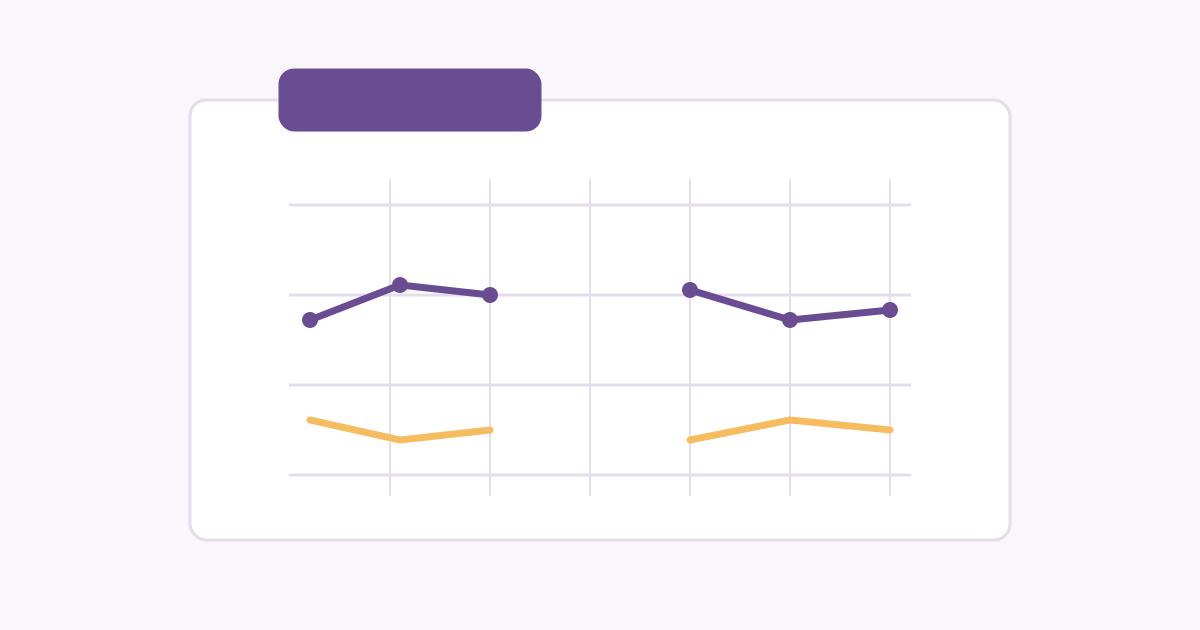
A mood and sleep record is useful when it preserves what you observed, including the days you did not record. I would rather discuss a short, honest diary than a smooth chart filled with guessed values. The diary beside the bipolar self-check keeps observations separate from the screening rule.
What can a mood and sleep diary help me record?
A diary can help you remember changes in sleep, mood and energy and identify questions for a conversation. It does not determine whether a clinical episode occurred. The NIMH information on bipolar disorder describes a mood journal as a way to track daily symptoms and notice changes, within a wider approach to care. A browser graph is only a record of the inputs you choose.
Before entering anything, consider who might see the record. You can use the Mood & sleep diary without a name, account or automatic upload by the tool. The wider website can still contain advertising and analytics. This guide offers general information, not diagnosis or personal medical advice, and does not recommend treatment decisions from diary patterns.
What should I enter for mood, energy and sleep?
| Field | Accepted entry | Interpretation limit |
|---|---|---|
| Day | A real calendar day, no future day | No automatic reconstruction of missing days |
| Mood | −3 to +3 relative to your usual mood | A personal rating, not a clinical scale |
| Energy | 0 to 4 | No diagnosis inferred from a high value |
| Sleep | 0 to 24 hours | No episode defined by hours alone |
| Optional note | Up to 240 characters | An observation, not a scoring input |
The center mood value can stand for your own usual mood; other values mark your own relative change. Keep that reference consistent enough to understand your entries later, but do not interpret it as a standardized severity measure. Two people can use the same number for different experiences. These ratings should never be compared as if they were interchangeable clinical scores.
Sleep hours and energy are separate for a reason. A sleep estimate does not establish sleep quality, reason for a short night, or a clinical decreased need for sleep. A note can add that context without the software interpreting it. Blank sleep is rejected rather than silently converted to zero, because zero hours is itself a meaningful claim.
What if I miss a day or cannot remember my sleep?
- Select the day the observation belongs to.
- Choose mood and energy using your own consistent reference.
- Enter estimated sleep hours and avoid invented decimal precision.
- Add a short concrete note only if it helps explain the observation.
- Review the row after saving and edit a mistake on that day.
There is one row per day and room for ninety days. Saving the same day updates its existing entry. A missing selection, invalid calendar day, future day or out-of-range number produces an error instead of a plausible-looking row. If you are uncertain about a day, leaving a gap is more honest than choosing the neutral value to make the graph continuous.
A missed entry is not a failure. The purpose is to retain observations, not maintain a streak. If keeping a diary becomes distressing or leads you to repeatedly scrutinize every small fluctuation, pause and discuss a suitable approach with a professional. The tool sets no daily reminder or completion target.
What should I write in a mood diary note?
Consider a hypothetical entry: mood +1, energy 3 and sleep 6 hours, with the note “Short night after travel; felt more active than usual.” Each field remains a personal observation. It does not become “hypomania detected,” and the software does not compare those inputs against diagnostic thresholds. The note provides context that the three numbers alone cannot carry.
Another entry with mood −2, energy 1 and sleep 9 hours is not a depression diagnosis. A professional assessment would consider duration, severity, consequences and other explanations. I avoid diagnostic shorthand in diary notes because it can obscure what actually happened. “Struggled to start ordinary tasks” is more concrete than assigning a disorder label to a chart point.
What do lines and gaps in the mood chart mean?
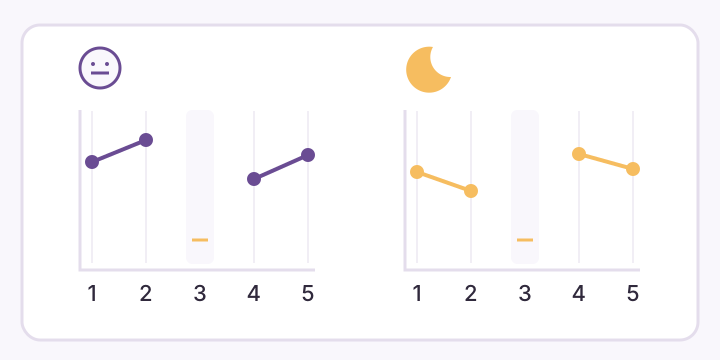
The chart places entries according to actual calendar spacing and connects only consecutive recorded days. Two rows separated by several days do not receive an interpolated line. That gap is not evidence that your mood stayed constant, improved gradually or followed an unseen peak. It simply marks that the record contains no entry there.
Mood and sleep have different units and separate axes. Energy stays in the table, where its exact rating is easy to read. Consider three hypothetical consecutive entries: sleep 6, 7.5 and 9 hours. The increase is 1.5 hours between each pair, while the personal mood ratings may be unchanged. That is a useful observation to describe. Keep possible context, such as work schedules or travel, in the notes rather than assuming one curve caused the other.
How do I correct or delete a diary entry?
Editing an entry loads its values into the form. Check the selected day before saving: a save for an existing day updates that row, while a different day creates or updates that other day. Use the table to verify the result. Deleting a single row requires confirmation, and clearing the diary requires a separate confirmed action.
The screening workspace remains independent. Retaking the self-check clears its responses but retains the diary. Diary entries never increase a symptom count or change the three-condition rule. If you want to clear both workspaces and the optional local draft, use Forget this session and confirm it. The rule guide explains that separate lifetime summary.
Where is my unfinished diary saved?
Without optional saving, the diary exists only in the memory of the open page and disappears when you leave or refresh. Draft saving stores both the diary and self-check locally in the browser. A saved draft is offered for deliberate resumption rather than displaying private answers immediately. On a shared browser, this persistence can expose information to another user.
A storage failure is reported; the tool does not pretend the draft was saved. Turning saving off removes its own saved key while keeping the current session available. Forgetting removes the tool's current data and key but cannot remove downloaded CSV files, screenshots, printed pages, clipboard content or browsing history. Those copies need their own consideration.
How can I export my mood and sleep diary?
The CSV contains diary day, mood, energy, sleep and note fields, with headings in your chosen language. It uses UTF-8 and quotes fields for commas, quotation marks and line breaks. Notes beginning with spreadsheet formula characters receive a protective prefix. Those precautions improve file handling; they do not make a sensitive file encrypted or anonymous.
Preview the CSV in your spreadsheet application and check that days and numeric columns remain understandable. Applications may display numbers or dates using their own locale settings. Do not upload a file merely to format it. A small selection of relevant observations and questions can be easier to discuss than every recorded row.
Immediate danger or inability to stay safe calls for local emergency services rather than continued logging. For human emotional support, choose your country at Find A Helpline. Neither a finished diary nor a particular mood rating is required to contact support.
Questions and answers
Does the chart detect episodes?
No. It displays personal observations with separate axes, without clinical classification or prediction.
Should I fill in missing days with zero?
No. Zero is an entered value, while a missing day is unknown. Leave gaps when you do not have an observation.
Does diary export include the self-check?
No. The diary CSV contains only diary fields. The screening summary has separate copy, text and print options.