Bipolar I and II: understanding the difference
Updated October 12, 2026 · Reading time: 6 min · 8 sections
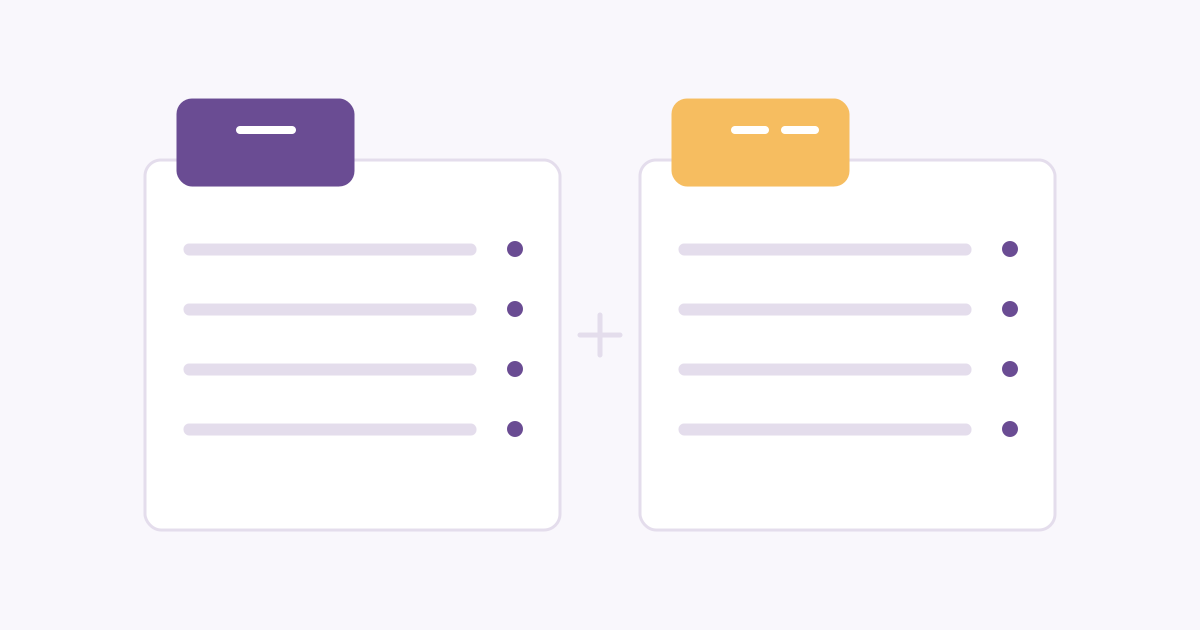
A result labeled “bipolar II” cannot be justified by adding up Yes answers in a short bipolar quiz. I separate subtype terms from screening output because a symptom count does not establish the kind of episode, its duration or the broader history needed for diagnosis.
What do bipolar I and bipolar II mean?
The NIMH description of bipolar disorder distinguishes bipolar I, involving manic episodes, from bipolar II, involving a pattern of depressive and hypomanic episodes. Depressive episodes may also occur in bipolar I. Hypomania is less severe than mania, but “less severe” does not make a history unimportant or remove the need for careful assessment.
These are clinical distinctions, not labels for a high or low quiz count. The words concern patterns across time, with consequences and context. A browser form cannot establish whether an experience meets an episode definition, exclude other explanations, or decide that a person's history belongs in a particular category. This guide offers general information, not a diagnosis or personal medical advice.
| Question | Self-check contribution | What remains unresolved |
|---|---|---|
| Have certain changes occurred? | Your responses to lifetime prompts | Clinical meaning and alternative explanations |
| Did several occur together? | Your same-period response | Detailed timing and episode boundaries |
| Were there problems? | Your impact response | Full consequences and current safety |
| Is the subtype I or II? | No subtype output | Professional assessment of the complete history |
How do mood changes compare with my usual behavior?
A lifetime prompt often asks whether you were not your usual self. That comparison is easy to lose when reading quickly. Being sociable in a setting where you are normally sociable is not identical to a distinct change noticed by people around you. Sleeping less because of a disrupted schedule does not, by itself, establish a decreased need for sleep within a clinical episode.
I prefer concrete observations over a retrospective label. “I slept fewer hours than usual and did not feel tired” describes something to discuss. “I was hypomanic” already contains a conclusion. You can bring the first description to a professional without needing to determine the second. The same principle applies to changes in activity, speech, spending or concentration.
What is the difference between bipolar I and bipolar II?
| Type | Elevated mood episodes | Depressive episodes |
|---|---|---|
| Bipolar I | Mania is the defining feature; hypomania may also occur. | Common, but a depressive episode is not required to define bipolar I. |
| Bipolar II | Hypomania, without a history of full manic episodes. | Depressive episodes are part of the pattern. |
The MedlinePlus overview explains the difference between mania and hypomania. Bipolar II is not simply a smaller symptom count: depression can have a substantial effect on everyday life. A professional examines the history of both elevated and depressed mood. The lifetime screening questions above do not assess that complete history.
Can a bipolar test show when my symptoms happened?
Thirteen Yes answers say that you endorsed thirteen prompts; they do not say that all experiences occurred together, lasted a specific duration or followed a particular sequence. Experiences from separate periods should not be silently placed into one imagined episode. The same-period follow-up is useful, but still much coarser than a clinical history.
When recollection is uncertain, say so. A useful note might distinguish what you remember directly from what someone else told you. Approximate order can be useful without invented precision. The optional diary on the bipolar test page records recent observations by day; it does not fill in earlier history or convert an incomplete recollection into a diagnosis.
Does a higher test score mean a more severe diagnosis?
The self-check's problems question matters to its displayed historical screening rule. Moderate or serious impact is one of three necessary conditions. But an impact response is not an instrument that ranks bipolar I above bipolar II, or determines which experience qualifies as mania or hypomania. That would ask the response to do more than it can support.
A complete response set that does not meet the rule can still deserve discussion. In particular, treating a low symptom total or minor impact as a guarantee would overstate what screening can exclude. The site never assigns a subtype, and it does not translate “not met” into “no bipolar disorder.” Read the three-condition guide for the exact software rule.
What else can cause similar mood symptoms?
Symptoms and changes do not arrive with a single cause attached. NIMH explains that a professional may consider medical conditions, medicines and other factors alongside mood symptoms. This is one reason a symptom list cannot replace assessment. An online worksheet has neither the examination nor the full context needed to sort those possibilities.
Do not experiment with prescribed medication to test a theory suggested by the form. If you have concerns about treatment or an unusual change after a medicine or substance, bring that concern to an appropriate professional. A note may preserve your observation, but this website cannot recommend a medication choice, dose or treatment plan.
How can I prepare to discuss symptoms with a professional?
- Describe a period when you noticed a change from your usual pattern.
- List concrete observations about sleep, activity, mood and consequences.
- Separate experiences that happened together from those that occurred elsewhere in your history.
- Mark what is uncertain rather than filling gaps with guesses.
- Ask how a professional would assess the history and other explanations.
You do not need to produce a perfectly organized document before seeking help. Notes are a convenience, not an eligibility requirement. The worksheet can help you remember questions, while a professional conversation may uncover information the prompts never asked for. Keep any record brief enough to be useful and appropriate to share.
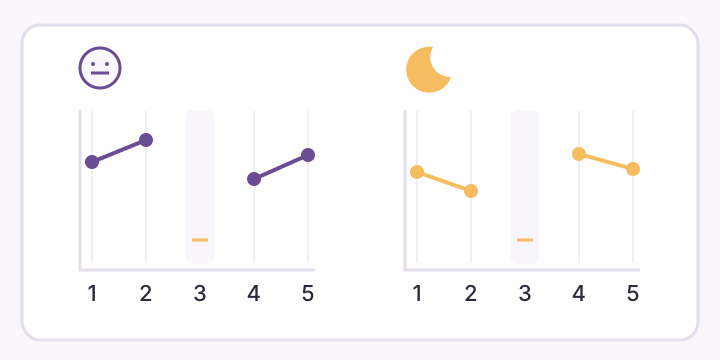
The optional mood and sleep diary uses personal ratings, not clinical scales. Energy is recorded separately, and missing days remain blank. Even a visibly repeating pattern does not authorize the website to classify episodes. The record guide explains how to keep an observation diary without turning each chart movement into a diagnostic claim.
Which parts of my test result can I save?
Before a conversation, choose one change you want to explain clearly. A hypothetical note such as “I usually sleep eight hours; during that period I slept five and felt rested” gives a baseline and a change. Add whether anyone noticed it and what happened to everyday activities. If you cannot recall how long it lasted, write that uncertainty rather than inventing a duration. A copied test summary can accompany those observations; the diary has a separate CSV export.
By default the tool works in page memory. An optional draft stores both workspaces in your browser, where another browser user may be able to resume them. Forgetting the session clears the tool's own draft and open data, not downloads, clipboard content, history or screenshots. The wider website may contain advertising and analytics, so local answer handling is not a blanket anonymity guarantee.
If you are in immediate danger or cannot stay safe, contact local emergency services. For emotional support, use Find A Helpline and choose your country. Present concerns deserve attention independently of subtype terminology or a screening threshold.
Questions and answers
Can a high count mean bipolar I?
No. Counts cannot establish mania, a clinical history or a subtype.
Does minor impact exclude bipolar II?
No. Not meeting the displayed screening rule does not rule out bipolar disorder.
Should I change treatment after this quiz?
No. The quiz offers general information, not medication or individual treatment advice.